AI Automation for Small Businesses: A Practical Guide to Reducing Manual Work
AI strategist with years of experience in automating enterprise workflows. Founder at Loopdock.
How Small Businesses Are Using AI to Automate Daily Operations and Scale Faster
Running a small business often means wearing multiple hats at the same time. One moment you're responding to customer inquiries, the next you're reviewing invoices, managing staff schedules, tracking sales leads, or trying to understand why a critical report hasn't been updated. As businesses grow, these day-to-day operational responsibilities quickly become overwhelming.
Many business owners discover that their teams spend more time managing repetitive administrative work than focusing on activities that actually drive growth. Tasks such as answering common customer questions, manually entering data, updating CRM records, generating reports, processing invoices, and coordinating internal workflows consume valuable hours every week.
This is where AI automation is transforming the way small businesses operate.
Artificial intelligence is no longer reserved for large enterprises with massive technology budgets. Today, startups, local service providers, ecommerce stores, agencies, healthcare practices, and growing companies are using AI-powered automation to streamline operations, reduce costs, improve customer experiences, and increase productivity without significantly expanding their workforce.
Instead of replacing employees, AI automation helps teams eliminate repetitive work so they can focus on strategic decision-making, customer relationships, innovation, and business growth.
Businesses that embrace automation early are finding themselves better positioned to scale efficiently while maintaining lean and agile operations.
Understanding AI Automation in Simple Terms
AI automation combines artificial intelligence technologies with automated workflows to perform tasks that would traditionally require human effort. Unlike conventional automation systems that operate based on fixed rules, AI-powered systems can analyze information, identify patterns, make predictions, and continuously improve their performance over time.
Imagine receiving hundreds of customer inquiries every week. A traditional automation system might route those messages into predefined categories. An AI-powered system can go further by understanding customer intent, prioritizing urgent requests, generating personalized responses, and even resolving common issues without human intervention.
This ability to learn and adapt makes AI automation significantly more valuable for modern businesses dealing with growing amounts of data and customer interactions.
Today, businesses are using AI automation for:
- Customer service and support operations
- Sales pipeline management
- Marketing campaign optimization
- Document processing and data extraction
- Financial reporting and forecasting
- Employee onboarding workflows
- Appointment scheduling
- Email management
- Inventory tracking and demand forecasting
- Internal business process automation
Why Operational Efficiency Has Become a Competitive Advantage
For many small businesses, growth creates an unexpected challenge. As customer demand increases, operational complexity increases as well.
More customers mean more support requests. More sales mean more invoices, reports, inventory updates, and administrative work. Without efficient systems in place, businesses often reach a point where growth begins to create bottlenecks.
Employees become overwhelmed with repetitive tasks, response times slow down, errors increase, and leadership teams spend their time solving operational problems rather than focusing on strategic initiatives.
AI automation helps businesses break this cycle.
By automating routine processes, organizations can create operational systems that continue functioning efficiently even as workloads increase. This allows businesses to scale without needing to proportionally increase administrative headcount.
In today's highly competitive marketplace, operational efficiency is often the difference between businesses that successfully scale and those that struggle to manage growth.
The Hidden Cost of Manual Processes
Many business owners underestimate how much repetitive work costs their organization.
Consider a company with five employees spending two hours each day manually updating spreadsheets, responding to routine emails, and transferring information between systems.
Over the course of a year, that can amount to thousands of hours spent on activities that contribute little direct value to customers.
Beyond labor costs, manual processes often create:
- Human errors and data inconsistencies
- Missed business opportunities
- Delayed customer responses
- Reduced employee productivity
- Poor customer experiences
- Inconsistent reporting and decision-making
AI automation addresses these issues by creating consistent, scalable workflows that operate continuously with minimal supervision.
Real-World Ways Small Businesses Are Using AI Automation
1. Customer Support That Never Sleeps
Customer expectations have changed dramatically. Modern consumers expect fast responses regardless of time zones, weekends, or business hours.
Small businesses are increasingly implementing AI-powered support assistants capable of handling common inquiries around the clock.
These systems can answer frequently asked questions, provide order updates, troubleshoot common issues, route tickets to the appropriate department, and collect information before human agents become involved.
The result is faster response times, improved customer satisfaction, and significantly reduced support workloads.
2. Intelligent Lead Qualification
Sales teams often spend considerable time reviewing leads that may never convert into customers.
AI systems can analyze lead behavior, engagement history, demographic information, and purchasing signals to identify which prospects are most likely to become customers.
This allows sales teams to prioritize high-value opportunities and focus their efforts where they can generate the greatest return.
Many businesses report higher conversion rates because sales representatives spend less time chasing unqualified leads.
3. Automated Financial Operations
Accounting and financial administration are among the most time-consuming responsibilities for growing businesses.
AI-powered systems can automatically process invoices, categorize expenses, reconcile transactions, identify anomalies, and generate financial reports.
Finance teams gain faster access to accurate information while reducing manual data-entry requirements.
4. Smarter Marketing Campaigns
Marketing teams are using AI to analyze customer behavior, segment audiences, personalize content, optimize advertising campaigns, and predict purchasing patterns.
Instead of relying solely on intuition, businesses can make data-driven decisions that improve campaign performance and maximize marketing budgets.
5. Human Resources and Employee Management
Recruitment, onboarding, and employee administration often involve repetitive processes that consume significant time.
AI automation can help screen applications, schedule interviews, manage onboarding documentation, answer employee questions, and streamline internal communications.
This enables HR teams to focus on talent development and employee engagement rather than administrative paperwork.
Common Mistakes Businesses Make When Implementing AI Automation
Although AI automation offers tremendous benefits, many organizations approach implementation incorrectly.
One of the most common mistakes is attempting to automate every process simultaneously.
Successful businesses typically begin with a single operational bottleneck, prove measurable results, and gradually expand automation initiatives.
Other common mistakes include:
- Automating inefficient processes without improving them first
- Using poor-quality data
- Failing to define clear success metrics
- Ignoring employee training and adoption
- Choosing technology without understanding business requirements
- Expecting immediate results without optimization
AI automation should be viewed as an ongoing business improvement strategy rather than a one-time technology project.
The Rise of Autonomous AI Agents
The next generation of business automation extends beyond simple workflows and chatbots.
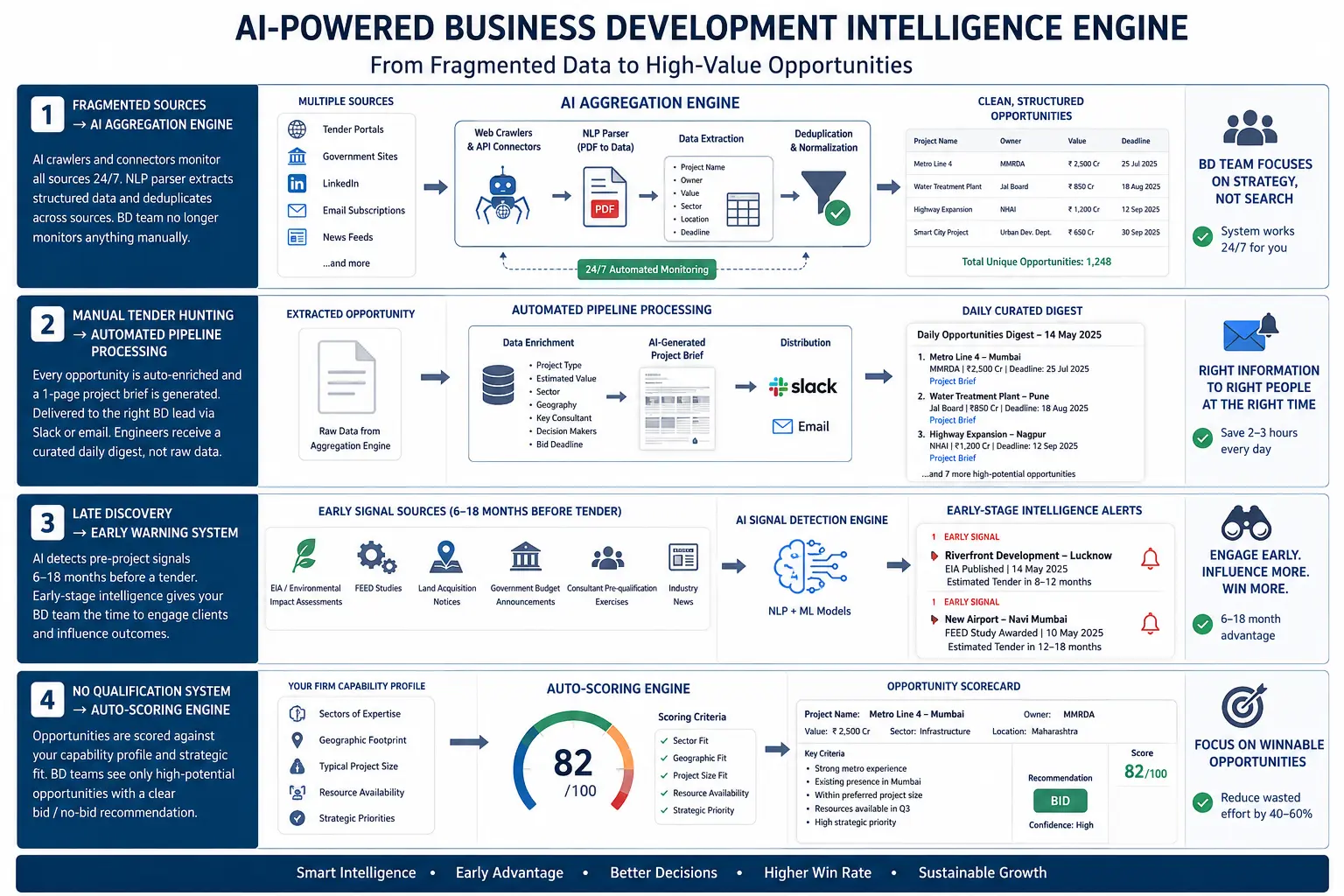
Autonomous AI agents are beginning to perform multi-step tasks independently. These systems can gather information, make decisions, communicate with multiple software platforms, monitor workflows, generate reports, and take action based on predefined business objectives.
For example, an AI agent could monitor incoming leads, enrich customer data, update CRM records, schedule meetings, notify sales teams, and generate management reports without requiring manual intervention.
This evolution is creating entirely new opportunities for small businesses to operate with enterprise-level efficiency.
Final Thoughts
AI automation is fundamentally changing how small businesses manage operations. What was once available only to large corporations is now accessible to startups and growing companies looking to improve productivity and scale sustainably.
The most successful businesses are not adopting AI because it is trendy. They are implementing automation to solve real operational challenges, improve customer experiences, empower employees, and create systems that support long-term growth.
As AI technologies continue to advance, businesses that strategically embrace automation today will be better equipped to compete, innovate, and scale in an increasingly digital marketplace.